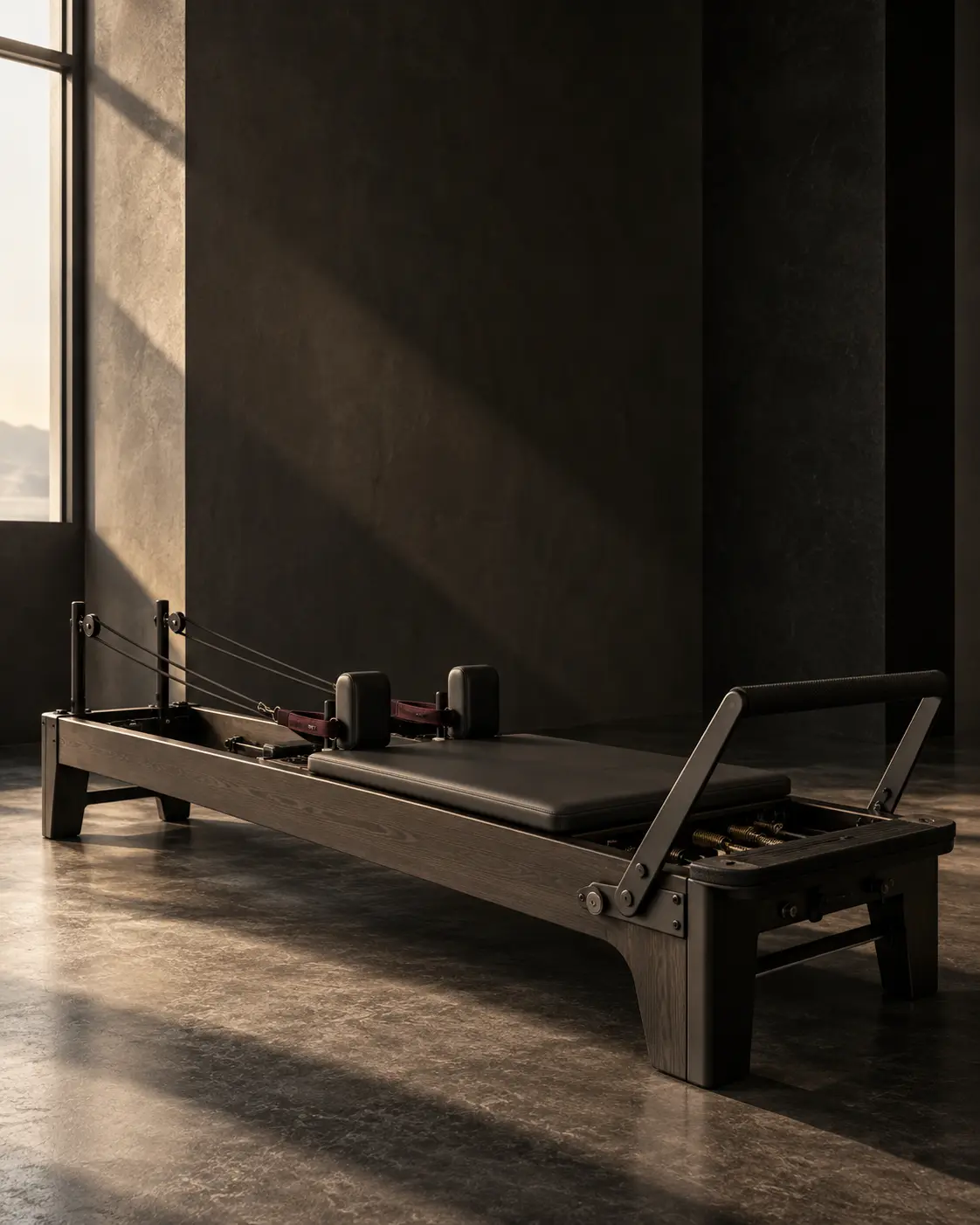
Most of the questions I receive before a first class come down to the same concern: “Am I flexible / strong / fit enough for this?” My answer is always the same. Pilates requires none of these things to begin with—it is there precisely to help you build them. What is worth knowing beforehand is practical.
What to wear
Close-fitting, stretchy clothing. Not for aesthetic reasons: your instructor needs to see the position of your pelvis, ribs and shoulder blades, and that is not possible under a loose T-shirt. Avoid zips, buckles and long necklaces—they can be uncomfortable during exercises lying down and may catch on the reformer.
You will not need shoes. Depending on the studio’s rules, grip socks may be required; you will be informed when booking. You will not sweat as much as you would on a run, but a small towel and some water are always useful.
When to arrive
Before your first session, we will briefly discuss your goals and anything I need to bear in mind; the booking confirmation will include the exact arrival instructions.
What to share
Anything you think I should know about your body: a previous injury, surgery or any movement that feels uncomfortable. I ask so that the class can be adapted to you safely; certain conditions may require modifications or prior consultation with a doctor or physiotherapist. If you have any health-related questions, discuss them with your doctor or physiotherapist first; Pilates instruction is not a substitute for their advice.
What happens during the class
Your first session will be slower than you might expect. We will not work through sets; we will focus on the fundamentals: how to breathe, where your neutral pelvis is and what it means to keep your rib cage “closed”. Some exercises will feel very simple—until you discover that, when performed precisely, they are anything but.
Do not be surprised if I ask for fewer repetitions than you could manage. The goal of the first class is not exhaustion, but for both of us to see how your body moves and where best to begin.
What to expect afterwards
You may experience mild muscle soreness the next day, but that is neither the goal nor a measure of the class’s quality. If you experience sharp, worsening or persistent pain, stop the exercise; tell your instructor and, if necessary, seek advice from a doctor or physiotherapist.
In one sentence
Come in comfortable clothing, at the agreed time, and tell me anything important. I’ll take care of the rest.